ADR Labels, Hazard Symbols, and UN Numbers Explained
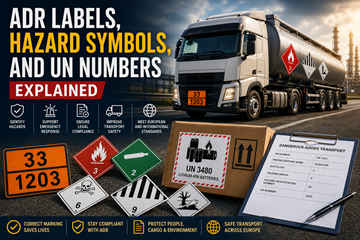
Whether transporting fuel, chemicals, lithium batteries, gases, corrosive substances, or industrial materials, ADR regulations require dangerous goods to be correctly marked and identified. In this complete guide, we explain ADR labels, hazard symbols, and UN numbers in simple terms.
What Are ADR Labels?
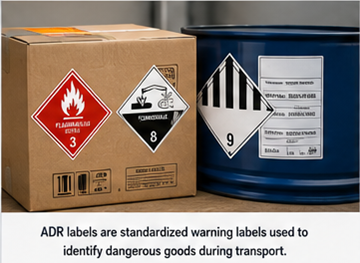
ADR labels are standardized warning labels used to identify dangerous goods during transport. They provide visual information about hazards associated with transported materials.
These labels are internationally recognized and required under ADR regulations across Europe.
- Hazard identification
- Emergency response support
- Transport safety information
- Dangerous goods classification
- International compliance
Why ADR Labels Are Important
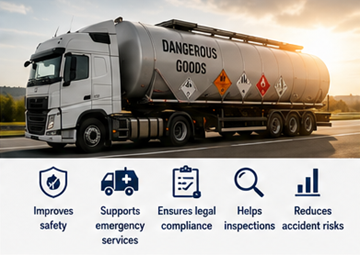
ADR labels help emergency responders, drivers, warehouse workers, inspectors, and logistics companies quickly recognize dangerous cargo.
Correct hazard markings reduce risks during accidents, fires, leaks, inspections, loading, and unloading operations.
- Improves transport safety
- Supports emergency services
- Prevents handling mistakes
- Improves legal compliance
- Helps roadside inspections
- Reduces accident risks
What Is a UN Number?
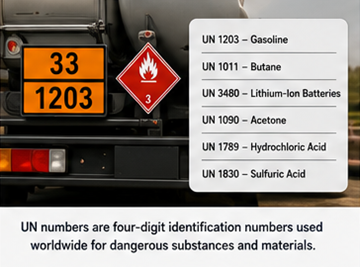
A UN number is an internationally recognized four-digit identification number assigned to dangerous substances and hazardous materials.
UN numbers are used in ADR transport documents, orange plates, labels, and dangerous goods declarations.
- UN 1203 — Gasoline
- UN 1011 — Butane
- UN 3480 — Lithium-Ion Batteries
- UN 1090 — Acetone
- UN 1789 — Hydrochloric Acid
- UN 1830 — Sulfuric Acid
ADR Orange Plates Explained
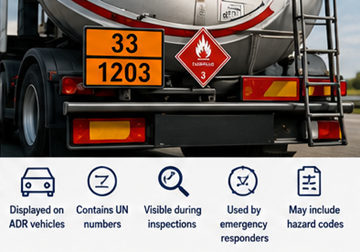
ADR orange plates are warning signs displayed on vehicles transporting dangerous goods. They help identify hazardous cargo quickly during emergencies and inspections.
Some orange plates display only the UN number, while others also include hazard identification numbers.
- Displayed on ADR vehicles
- Visible during roadside inspections
- Used by emergency responders
- Contains UN numbers
- May include hazard codes
ADR Hazard Symbols and Their Meaning
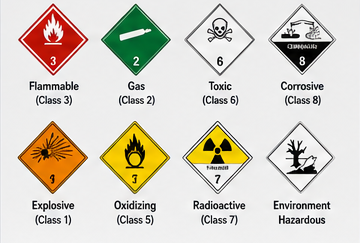
ADR hazard symbols visually identify the type of danger associated with dangerous goods.
- Flame symbol — Flammable materials
- Gas cylinder symbol — Compressed gases
- Skull and crossbones — Toxic substances
- Corrosion symbol — Corrosive substances
- Explosive symbol — Explosive materials
- Radiation symbol — Radioactive materials
- Environmental hazard symbol — Dangerous for the environment
Each symbol corresponds to a specific ADR hazard class and transport requirement.
ADR Class Labels Explained
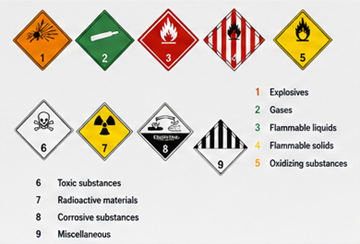
ADR dangerous goods are divided into hazard classes. Each class uses a specific label design and color.
- Class 1 — Explosives
- Class 2 — Gases
- Class 3 — Flammable liquids
- Class 4 — Flammable solids
- Class 5 — Oxidizing substances
- Class 6 — Toxic substances
- Class 7 — Radioactive materials
- Class 8 — Corrosive substances
- Class 9 — Miscellaneous dangerous goods
Lithium Battery Labels
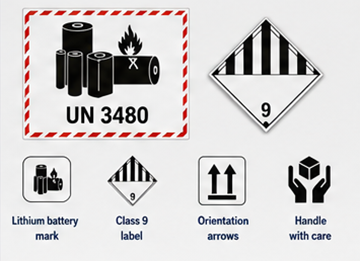
Lithium batteries require special warning labels because damaged batteries may create fire and thermal runaway risks.
- UN 3480 labels
- Class 9 lithium battery labels
- Battery handling marks
- Cargo orientation arrows
- Dangerous goods warnings
Where ADR Labels Must Be Displayed
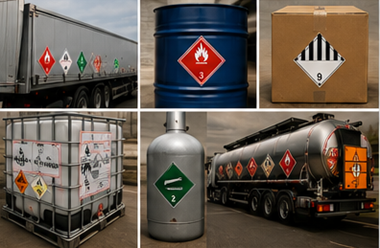
ADR labels and hazard markings may need to appear on packages, containers, vehicles, tanks, and transport units.
- Transport vehicles
- Chemical containers
- Industrial drums
- Shipping cartons
- Battery packages
- Tank vehicles
ADR Labels During Roadside Inspections
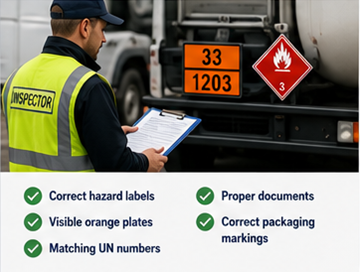
Transport authorities regularly inspect dangerous goods vehicles to verify ADR labels, orange plates, UN numbers, and documentation.
- Correct hazard labels
- Visible orange plates
- Matching UN numbers
- Proper dangerous goods documents
- Correct packaging markings
Incorrect or missing labels may result in heavy fines and transport restrictions.
Common ADR Labeling Mistakes
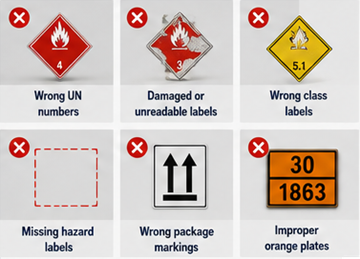
Incorrect dangerous goods labels are one of the most common ADR transport violations in Europe.
- Wrong UN numbers
- Missing hazard labels
- Incorrect class labels
- Damaged or unreadable labels
- Wrong package markings
- Improper orange plates
Conclusion
ADR labels, hazard symbols, orange plates, and UN numbers are essential for safe dangerous goods transport across Europe. They help identify hazardous materials quickly and improve transport safety, emergency response, and legal compliance.
Correct ADR labeling protects drivers, transport companies, warehouses, emergency responders, and the environment while supporting efficient international logistics operations.
Frequently Asked Questions About ADR Labels and UN Numbers
What are ADR labels?
ADR labels are standardized dangerous goods warning labels used during hazardous materials transport.
What is a UN number?
A UN number is an internationally recognized identification number assigned to dangerous substances.
What are ADR orange plates?
ADR orange plates are warning signs displayed on dangerous goods vehicles to identify hazardous cargo.
Why are ADR hazard symbols important?
ADR hazard symbols help emergency responders and transport workers quickly identify dangerous substances and associated risks.
Which ADR class applies to lithium batteries?
Lithium batteries are generally classified under ADR Class 9 miscellaneous dangerous goods.
Where must ADR labels be displayed?
ADR labels may need to appear on packages, transport vehicles, tanks, containers, and shipping units.
What happens if ADR labels are incorrect?
Incorrect ADR labels may result in fines, shipment delays, transport restrictions, and increased safety risks.
eXus Dev